
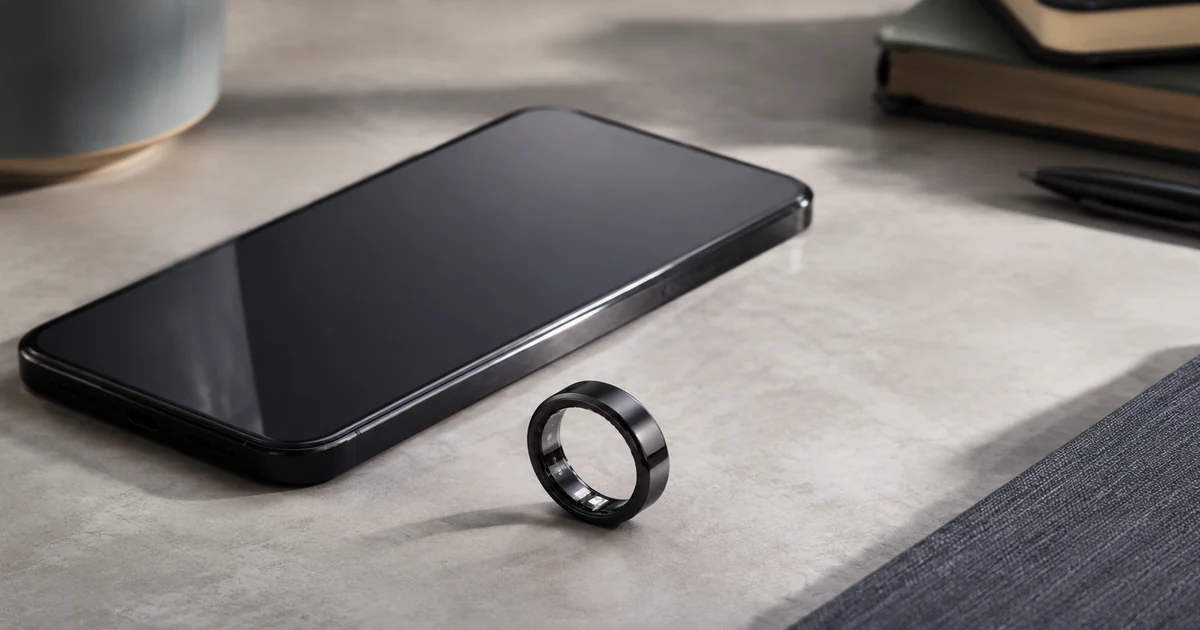
You have picked a smart ring or a band, agreed the specs, and then the harder question arrives: what about the app? On a wearable the app is where the customer actually spends time, so this is a product decision, not a line item to sort out later. The good news is that it is not a choice between a generic white-label app and an expensive custom build. There are three paths, and they let you trade cost and time to market against how much control you keep over your branding and your data. This guide lays out the three, what each costs and takes, and what to settle in the contract no matter which you choose.
TL;DR
- The three app paths are white-label as-is, a white-label base plus SDK or API, and fully custom.
- White-label launches fastest and cheapest with the least control; custom gives the most control at the highest cost; SDK or API sits in the middle.
- Settle data ownership, the app-store account, and maintenance in the contract.
- Yawell offers all three. Terms are confirmed in a written RFQ.
The app is a decision, not an afterthought
A screenless band has no display at all, and even a ring shows nothing on the device, so every reading the customer sees comes from the app. That makes the app as central as the hardware. A rushed app choice shows up as a generic experience, a data set you do not control, or a maintenance bill you did not plan for.
The mistake most first-time hardware brands make is treating this as white-label-or-build-your-own. There is a middle path, and knowing it exists changes the budget conversation.
The three app paths
The first path is the white-label app as-is. The supplier gives you a ready companion app and rebrands it with your name, logo, and colors. You launch with the device and write no code.
The second path is a white-label base plus SDK or API. You keep the supplier’s proven device firmware and app foundation, and you use an SDK or API to pull the device data into your own app or your own cloud. You get more branding and data control without building the hardware integration from scratch.
The third path is a fully custom app. Your team builds the app end to end, which gives you complete control over the experience and the data and carries the highest cost and the longest timeline.
Cost
Cost climbs as you move from white-label to custom. The white-label app is the cheapest because the software already exists and you pay to rebrand and maintain it. SDK or API work costs more because you build your own app layer on a supplied foundation. A fully custom app costs the most because you pay for design, development, and testing of everything.
For scale, general industry figures help even though they are not wearable-specific and are not Yawell’s prices. One 2026 pricing guide puts mobile app development from about $15,000 for a simple app to $400,000 or more for a complex, feature-rich one, and it puts a market-validation MVP at roughly 2 to 4 months and about $15,000 to $40,000. Treat these as ranges that show the spread, then get real numbers for your exact scope in a quote.
Control over branding and data
Control is the reason to spend more. On the white-label path your branding is usually a logo, a color, and a name on an existing layout, and the customer data typically lives on the supplier’s platform. On the SDK or API path you can present your own app and route the data into your own store. On the custom path you own the whole experience and the whole data set.
Two control questions deserve a decision on any path. The first is data ownership. Who owns and controls the health data the device collects is a real and contested question, so agree explicitly who owns it and where it is stored rather than assuming it is yours. The second is the app-store account. Decide whether the app is published under your own Apple and Google developer accounts or the supplier’s, because that affects who controls the listing and the updates.
Time to market
Time to market moves the opposite way from control. The white-label app launches with the device, since the software is ready. An SDK or API build adds the time to design and ship your own app layer. A custom app adds the full cycle of design, development, and quality assurance, which is why it takes the longest. If speed to launch is your priority, the white-label path wins; if a differentiated experience is the priority, the custom path earns its longer timeline.
Comparison table: three wearable app paths
| Path | Upfront cost | Control (branding + data) | Time to market | Best fit |
|---|---|---|---|---|
| White-label app as-is | Lowest | Basic rebrand; data on supplier platform | Fastest, launches with the device | First launch, tight budget, validate demand |
| White-label base + SDK/API | Medium | Your app or cloud pulls the device data; more branding and data control | Medium | Brand that needs its own app or data but not custom firmware |
| Fully custom app | Highest (industry app builds run ~$15k simple to $400k+ complex) | Full control of branding and data | Longest, custom build and QA | Scaled brand, differentiated experience, owns data end to end |
What to settle in the contract, on any path
The path you pick matters less than the terms you write down. Settle these before tooling and before the app work starts:
- Data ownership and where the data is stored, in writing.
- The app-store developer account: yours or the supplier’s.
- Branding depth: logo and color only, or a full themed experience.
- Maintenance, updates, and how long the app is supported across new phone OS versions.
- SDK or source access, so you can move to more control later if you decide to.
That last point matters because it protects your ability to change your mind. A white-label start with SDK access keeps the door open; a white-label start with no access can lock you in.
Which path should you choose?
Choose the white-label app if this is your first launch, your budget is tight, and you want to validate demand quickly. It gets a branded app in front of customers with the least cost and the least delay.
Choose the SDK or API path if you need your own app or your own data store but do not need to rebuild the device firmware. It gives most of the control for a fraction of a full custom build.
Choose the fully custom app if you are a scaled brand, you want an experience no competitor can copy, and you want to own the data end to end. It costs the most and takes the longest, and for the right brand it pays back.
Because the first choice is a starting point rather than a permanent one, many brands launch white-label, learn from real users, and then add SDK access or move to custom as volume and budget grow. Yawell supports all three paths. The ring and band lines use the QRing companion app, the A2C glasses use the HeyCyan app, and SDK, API, and fully custom paths are scoped per project.
FAQ
Is a white-label app cheaper than a custom one?
Yes. A white-label app reuses existing software, so it costs the least and launches the fastest. A custom app costs the most because you pay to design, build, and test everything.
Who owns the data in a white-label app?
It depends on the contract. Data ownership is a real question, so agree in writing who owns the health data and where it is stored rather than assuming it is yours.
How long does a custom app take?
Longer than white-label, because it adds design, development, and QA. As a rough industry benchmark, a validation-stage MVP is often 2 to 4 months, and a full custom app can run much longer depending on scope.
Can I start white-label and go custom later?
Usually, if you keep SDK or source access in the contract. Many brands launch white-label to validate demand and migrate to more control as they grow.
What app does Yawell provide?
Yawell provides the QRing companion app for the ring and band lines and the HeyCyan app for the A2C glasses, plus SDK, API, and fully custom paths scoped per project.
Ready to scope your app path
Decide how much control you need on day one, then send an RFQ that names your device, your branding depth, your data-ownership requirement, and whether you want white-label, SDK or API, or a custom app. Yawell replies with the options and a written scope. If you are still choosing hardware, read the screenless smart band OEM guide and the smart ring vs screenless band comparison, then open an RFQ.